Assessing moisture risk before closing
Steps to assess moisture risk before closing on a home: score the address before the offer, get the disclosure early, book the inspection at the start of the contingency, not the end.
Step by step
Before the offer: score the address
It needs no access, no permission and no email, and it takes seconds. What it gives you is not a verdict but a shape — which of the four modules is doing the work, and therefore what to ask about. Doing this before you write the offer is what lets you price the contingency period you actually need rather than accepting the standard one.
Before the offer: ask for the disclosure
"Could you send the completed property disclosure statement so I can review it before submitting an offer?" is a normal request in a normal transaction. It is the heaviest single document available and it costs nothing. Read the roof, basement, plumbing and drainage questions, not just the mold question — sellers who answer no to mold routinely answer yes to a basement that has taken water.
Day one of the contingency: book the inspection
Not day ten. If the general inspection turns up elevated moisture with no visible source, you need time left to bring in someone with a thermal camera and a meter, and specialists are rarely available the same week. The contingency is a clock, and most buyers start it late.
At the viewing: walk the perimeter yourself
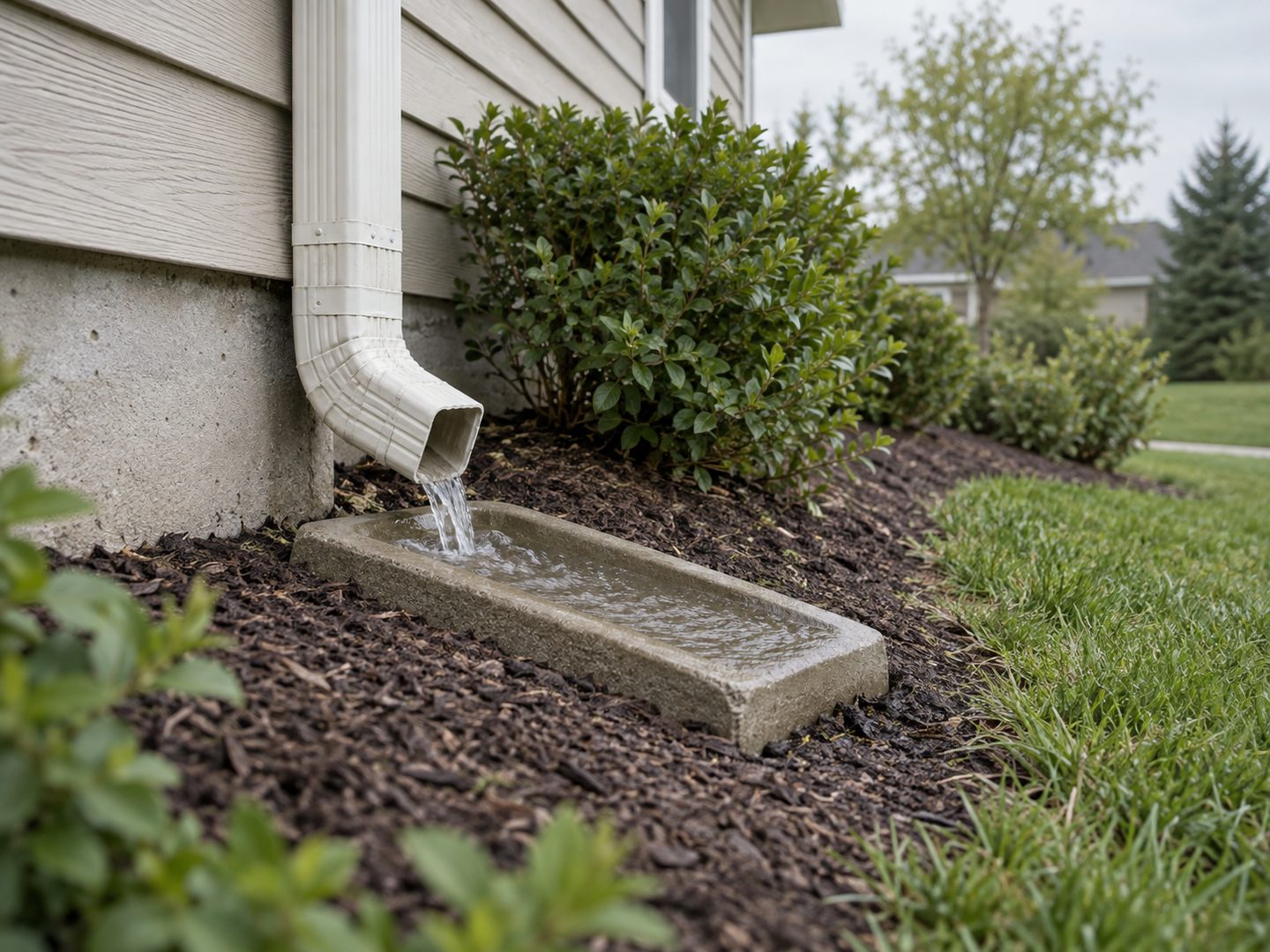
Which way does the ground slope at the foundation. Where do the downspouts discharge. Is there a tide line on the basement wall at a consistent height, or efflorescence on the masonry, or one room with newer flooring than the rest. Two minutes, no cost, and it settles questions photographs cannot.
At the viewing: find the shut-off
Look at the supply pipe. Grey flexible plastic in a house built between 1978 and 1995 is polybutylene until shown otherwise — pipe that fails from the inside without warning, releasing water inside wall cavities. It is a real, quotable item and some insurers surcharge or decline for it, which is worth knowing before binding rather than at binding.
On any yes: ask for the paperwork, not the story
"The disclosure mentions water in the basement in 2019 — could you share the invoice or the scope from whoever did the work?" A documented remediation naming the source correction, with an independent clearance, is reassuring. A remembered repair by an unnamed contractor is not.
Before the contingency closes: decide, in writing
If a specialist assessment is warranted, frame it as scheduling rather than suspicion, and commission it yourself — a report paid for by the seller answers a question they are paying to have answered one way. Agree in writing what finding would trigger renegotiation, before anyone has an interest in the result.
What the output should leave you with
A score with its band and, more usefully, a driver list naming the specific factors. That list is what you hand the inspector, and it changes where they start.
A completeness figure reported separately, so you can tell an estimate built on verified records from one built on a neighbourhood median. If the construction year is estimated and the property is from an era that matters, getting it confirmed is the highest-value correction available.
A disclosure module that is either analysed or explicitly not. Where no form has been supplied, the report says the largest module was not analysed rather than implying a clean record — silence and a clean history look identical from outside, and they are not the same thing.
Why a mold history is often the better position
The question is never whether mold has ever been present — it has been present in most buildings at some point. The question is whether the water that caused it still arrives.
A disclosed event with a scope naming the source, the material removed, and a clearance performed by someone with no involvement in the removal is a known quantity. A property with no history at all is an unknown quantity, and one of those two is easier to price.
What should give you pause is remediation with no source correction. Cleaning and repainting a basement wall that is still wet is a cosmetic act, and the growth returns on the schedule it always had.
Coverage and data vintage
The full four-module model runs in Pennsylvania, New Jersey and Delaware, where the terrain profiles are built out and the statutory forms — the PA SPD, NJ SPCDS and DE SDCR — can be parsed. Elsewhere the report covers climate, terrain and building data, and says the disclosure layer was unavailable.
Property records reflect the last recorded transaction or assessment, so recent work may not appear. Anything the seller has fixed that no record knows about has to be documented rather than assumed.
Questions people ask
- How long should the inspection contingency be?
- Long enough that a specialist can still get out if the general inspection flags something. Scoring the address before the offer is what tells you whether this is a property where that is likely.
- Can I make the offer contingent on a moisture assessment?
- Yes, and it is more useful than a general contingency because it names what would trigger renegotiation. Agree the trigger in writing and leave enough window for someone to actually attend.
- The seller will not allow a specialist. What now?
- Treat it as a data point rather than an obstacle to argue about. A seller declining a non-invasive assessment during a normal contingency period is telling you something, and it is cheaper to learn it now.
- Is a general home inspection enough?
- It covers visible moisture and staining, and most inspectors exclude mold assessment in their own scope language. Read the exclusions in your inspector's contract before assuming otherwise.